EARTHQUEST (Canada) for the Environment
La Suerte Biological Field Station
Ometepe Biological Field Station

Field biology projects, learn how to be a field primatologist, Biology, research and conservation, Field training and employment opportunities

navbar

Testimonials

Frequently Asked Questions

History

FBT Courses

Primate FBT Courses

Medicinal plant FBT Courses

FBT Courses in management/leadership

Nicaragua Ecology and Behaviour of primates courses

FBT Program

Rainforest Ecology course

International Ethnobotany course

Application form for all programs

Reference form and letter for all programs

Biological Field School

Biological Field School application form

Reference form and letter for Biological Field School

GIS certification course

Jobs

Financial aid

Environmental assessment course

AFBSST Course
to La Suerte & Ometepe Biological Field Stations in Costa Rica/Nicaragua to study ecology and behaviour of free-ranging primates

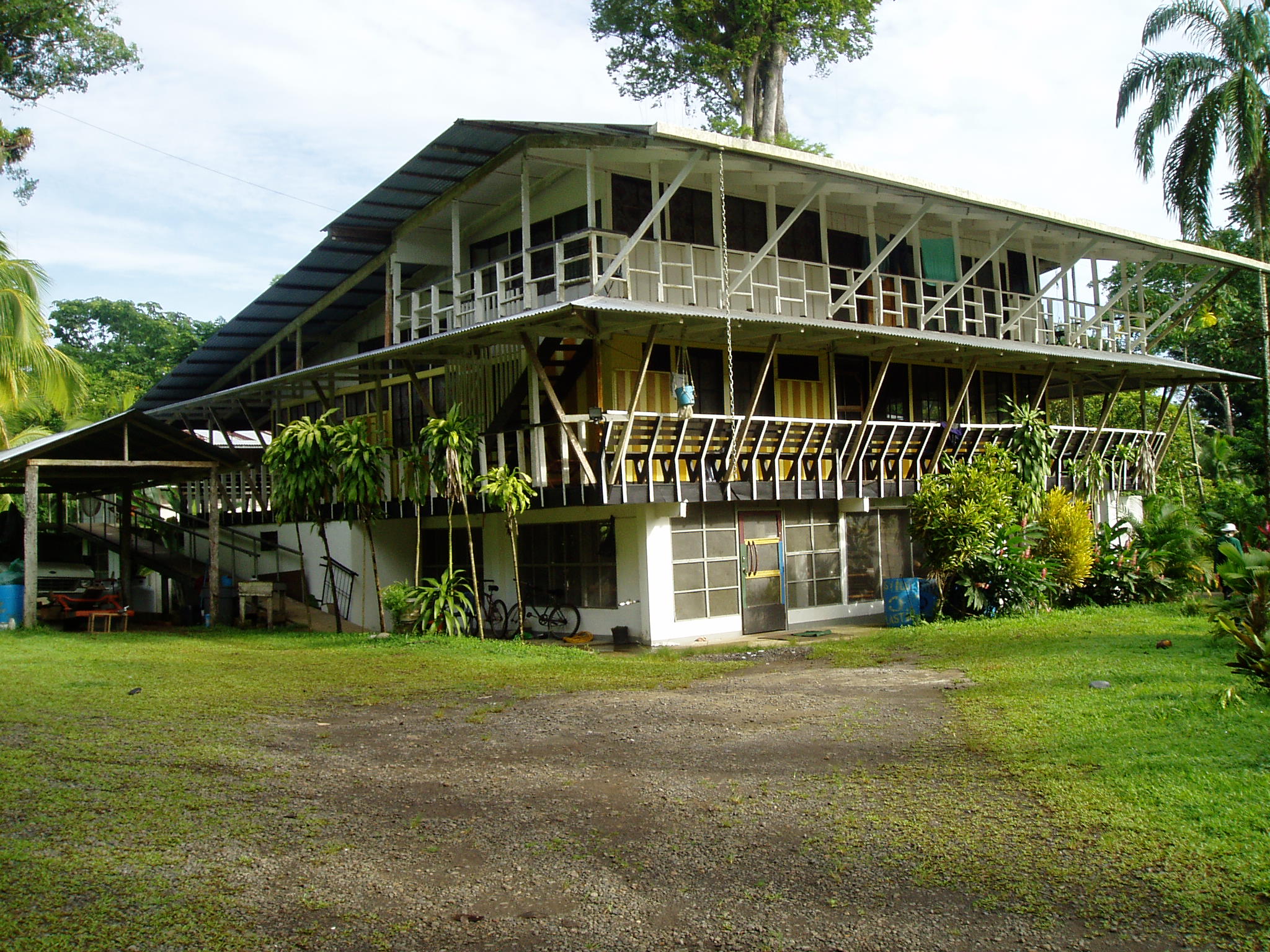
EARTHQUEST (Canada) now has an opportunity to journey to Costa Rica/Nicaragua and learn how to study free-ranging primate species. We will only be offering five Expedition/AFBSST equivalent course to Costa Rica/Nicaragua in 2011. Our mission will be to travel to the La Suerte Biological Field Station located in Costa Rica and study the ecology and behaviour of free-ranging primate species that live there. This course is designed to be a field course which explores the interfaces between primate behavior and biology. The field site will serve as a living laboratory where students experience New World monkeys, their biology and behavior, in their native habitats. The course is comprised of daily lectures and daily field exercises on aspects of primate ecology, biology, behavior, and the rainforest environment. Howler monkeys and possibly capuchins will be observed on a daily basis in forest environments surrounding the field station. All students will develop research proposals which will be done on site during the latter half of the course.

Lecture topics in the course will include:

Introduction to primate behavior and ecology.
What is a primate? A discussion of primate evolution and classification. What characteristics or traits sort out primates into groups? What distinguishes New World primates?
What do primates look like-inside and out? An overview of primate morphology including the skeleton, teeth, body size, adaptations of other morphological systems.
Life history of primates: How long does it take a primate to grow up? How does appearance and behavior change with age?
Primate adaptions in the forest: What are the resources and how do primates respond?
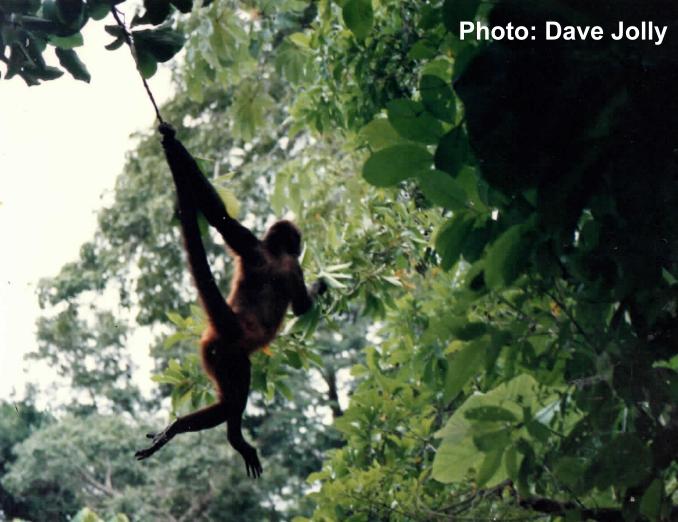
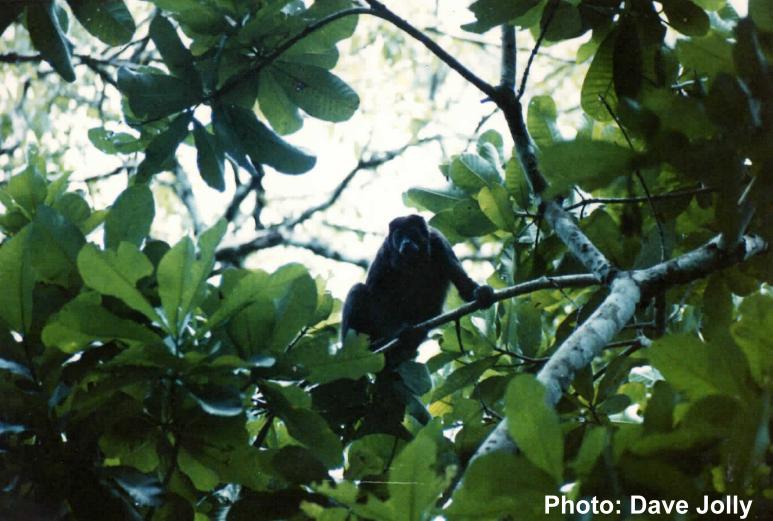
A close look at the mantled howler monkey (Alouatta) and capuchin (Cebus): life history and behavior including ecology, resource exploitation, locomotor and positional adaptions, social behavior, reproduction, etc.
Neotropical forest conservation: What is the future for primates in the rainforest: What can be done to promote their survival?

Project team members will help track primates through the jungle and learn about them through direct observation.

You can live the life of a Tropical Field Biologist/Primatologist
and study two Neotropical monkey species.

..........Document & identify primate species
..........Record significant or rare behaviour patterns of free-ranging primate species
..........Live & travel like pioneer Primatologists
..........Perform manual field work
..........Some of the research topics you will learn include;

i. Sexual selection and primate social structure
ii. Primate social organization
iii. Primate anatomy, morphology and positional behavior
iv. Dominance and kinship
v. Feeding ecology and foraging behavior
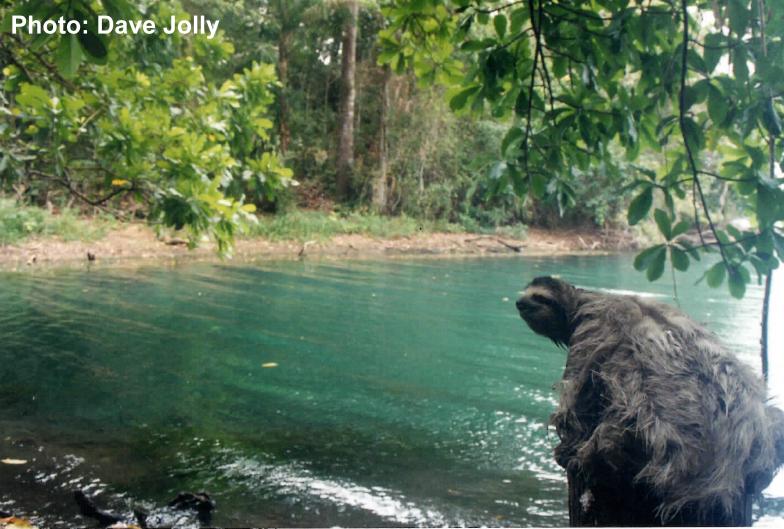
(Photos by D. Jolly & La Suerte/Ometepe)
Isleta de Granada, Ometepe Island
See tropical birds, mammals, insects and other creepy crawly things
Learn how to conduct primate field studies
Mantled Howler monkey

Explore trails
Habitat mapping procedures
Observational sampling techniques on primates
Red-eyed Frog
White-faced capuchin
monkey (Photo: La Suerte)


Dates: Summer session #1: May 25 - June 19, 2011; $2874.00 USD - Costa Rica
Summer session #2: June 22 - July 17, 2011; $2874.00 USD - Nicaragua
Summer session #3: July 20 - August 14, 2011 - Costa Rica/July 22 - August 16, 2011 - Nicaragua; $2874.00 USD
Extended Summer session #2: May 25 - July 17, 2011 - Nicaragua/Costa Rica (combines primate communication and behaviour/ecology)
Cost: $4874.00 USD

(Please note: Due to the nature of the program, all prices and program contents are subject to change without prior notice or approval).

Included in 34 - 52 day Course Costs:
..........Services of project staff
..........Certificate of completion
..........room and board (3 meals per day) at La Suerte or Ometepe biological field station
..........instruction
..........SCHEDULED transportation from near the airport in San Jose, Costa Rica to La Suerte or to Nicaragua to Ometepe round trip
..........Course tuition
..........FBSST Course tuition

Not Included in 34 - 52 day Course Costs:
..........Airport taxes and government departure taxes
..........Health or cancellation insurance
..........Beverages/liquor
..........Additional funds for souvenirs, extra food, etc.
..........Valid passport
..........Immunizations/vaccinations
..........Personal supplies (e.g. hiking boots, tents, clothing, etc.)
..........Round trip airfare to San Jose, Costa Rica
..........Academic credit

To Register for the Course: For 26 day course a non-refundable deposit of $699.00 US/person + $80.00 USD registration fee is required to secure space. Full payment is due 60 days prior to departure (postmarked by mail does not count). We recommend that you book early as spaces on teams fill quickly and are limited to 22 participants. Spaces are filled on a first-come, first-serve basis and fill quickly so we recommend that you apply ASAP. All tuition costs are NON-REFUNDABLE, but may be transferred to another year. Academic credit is available - please inquire for details. For information on terms and conditions please click here. For applications please click here.

Ecotours and expeditions, Learn how to be a field biologist, Biology, research and conservation, Field training and employment opportunities

 E-mail: earthquestcanada@yahoo.com

Senior Biologist & Instructor
D. Jolly, B.Sc.
EARTHQUEST (Canada) for the Environment

©copyright EARTHQUEST (Canada) for the Environment

Website designed and maintained by D. Jolly
Last Updated 01/03/2011